-
 Media gallery
-
 Media gallery
-
 Media gallery


Bamboo Palm Plant
- Sale price
- Rs. 225.00
- Regular price
-
- Regular price
- Rs. 225.00
- Unit price
- per
Couldn't load pickup availability
Product Description
Product Description
About The Product
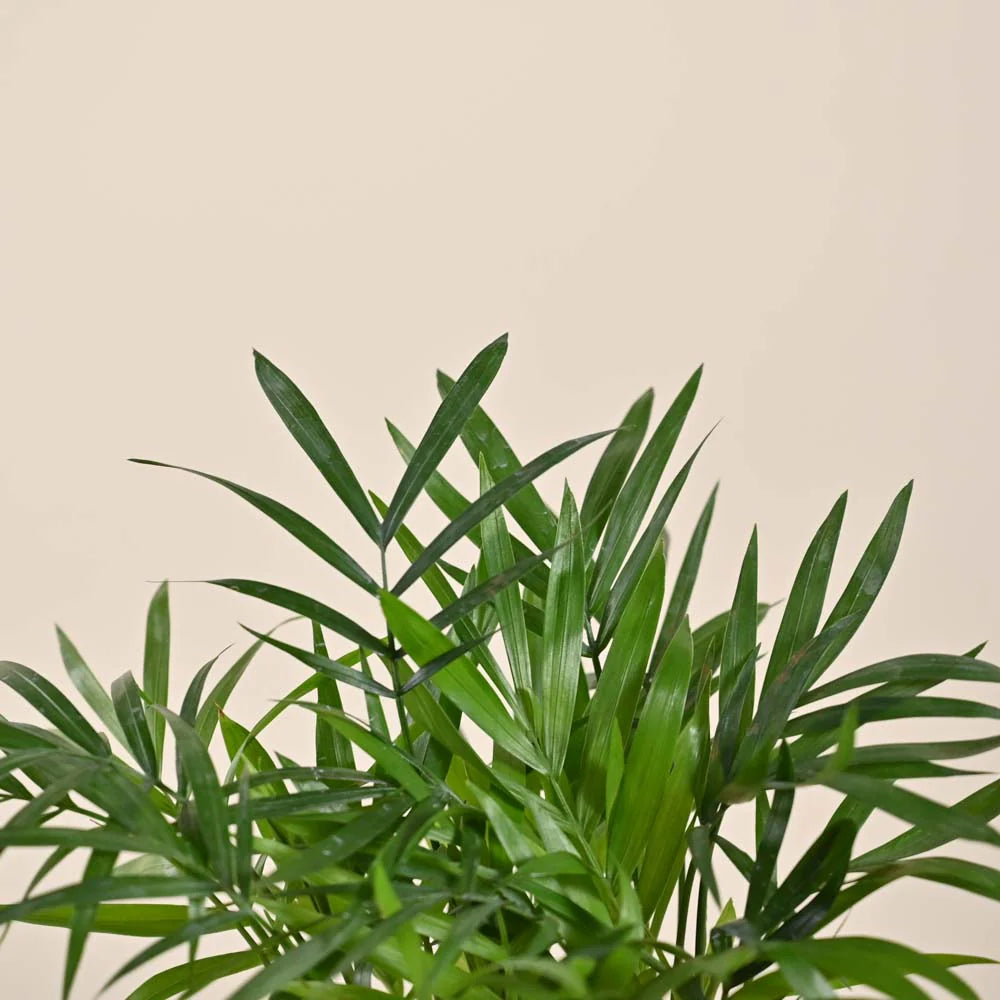
The Bamboo Palm (Chamaedorea seifrizii) is a favorite among interior designers for its "jungle-chic" look and its ability to thrive where other palms struggle. Unlike the finicky Areca, the Bamboo Palm is more shade-tolerant and resilient, making it the perfect choice for Indian homes with varying light conditions.
Care Instructions
Care Instructions
Light: Thrives in bright, indirect light. While it can handle some morning sun, harsh afternoon rays will bleach the golden leaves. In low light, the plant may drop leaves or lose its vibrant yellow tint.
Watering: Keep the soil consistently moist but never waterlogged. Water when the top inch of soil feels dry to the touch. Note: Aralias are sensitive to overwatering, which can lead to root rot.
Humidity: This plant loves high humidity ($60\%+$). Mist the leaves regularly or place it near a humidifier to mimic its tropical origins.
Temperature: It prefers warmth ($18°C$ to $29°C$). Be careful during Indian winters; keep it away from cold windows or chilly drafts.
Fertilizer: Feed with a balanced, water-soluble fertilizer every 4–6 weeks during the growing season (Spring to Autumn).
Benefits & Uses
Benefits & Uses
First Aid Kit in a Pot: The gel inside the leaves is famous for soothing minor burns, insect bites, and skin irritations. (Ensure it is a medicinal variety before topical use).
Oxygen Bomb: Unlike most plants, Aloe Vera releases oxygen at night, making it an excellent plant for your bedroom to improve sleep quality.
Toxin Filter: It helps remove formaldehyde and benzene from the air—chemicals often found in household cleaners and paints.
Low Maintenance: Ideal for busy professionals or students. It can survive for weeks without attention.


Notified by email when this product becomes available

Frequently Asked Questions
Mushy, translucent leaves are a classic sign of overwatering. Stop watering immediately and allow the soil to dry out 100%. If the base is black, it may have root rot.
Give it plenty of bright light and keep it slightly root-bound (in a smaller pot). Once the plant is mature and happy, you will see tiny "pups" popping up around the base.
Only if the bathroom has a very bright window. Most bathrooms are too humid and dark for succulents, which can lead to fungal issues.
While the gel is used by humans, the outer skin of the leaf contains saponins, which are mildly toxic to cats and dogs if chewed. Keep it on a shelf out of reach.